
“`html
Subscribe to Blog via Email
Stripes are a timeless fashion staple that can make a bold statement or add a subtle texture to your outfit. However, many people shy away from stripes, fearing they might appear wider than they are. In this blog post, we’ll uncover the secrets to wearing stripes without the unwanted optical illusion. By strategically choosing how and where to wear stripes, you can look chic and stylish, instead of wider. We’ll explore techniques like garment length, stripe placement, vertical line creation, and fabric choices to help you master wearing stripes confidently. Let’s dive into the world of stripes and revamp your wardrobe!
Leave a ReplyCancel reply
Fashion is an art, and nothing says bold like a stripe patterned outfit. Whether these stripes hug your curves or drape effortlessly over your silhouette depends largely on the garment’s cut. The fundamental rule is that the garment should be longer than wide. A longer garment creates an illusion of length, which balances the breadth, thereby averting any visual widening effect.
Look for dresses and tops that skim the body rather than cling tightly. This means choosing silhouettes like A-line dresses or tunics that cascade elegantly, creating a vertical flow that elongates the body. For instance, a loose top with stripes that ends mid-thigh paired with slim pants can create a harmonious proportion that flatters any body type.
1. Make sure the garment is longer than it is wide
When aiming for a chic striped look, the proportions of your clothing play a vital role. Always consider the garment’s cut—particularly its length compared to its width. A dress or top that is longer elongates the silhouette, drawing the eye vertically rather than horizontally, which helps in avoiding unnecessary width.
Opt for stripes that flow lengthwise on garments rather than spanning across a body area that isn’t naturally wide. Garments like shift dresses or longer tops can lengthen your appearance, balancing the natural width with vertical extension. This approach provides not just comfort, but also a modern take on classic patterned wear.
In addition, when selecting garments, pay attention to the fit. Avoid pieces that are extremely tight, as this can distort the stripe pattern, potentially accentuating areas you’d rather keep understated. This ensures that the stripes remain an ally in your style arsenal rather than a challenging foe.
2. Watch where the stripe sit
Stripe placement is key to achieving a balanced look. Strategic positioning of stripes can accentuate your best features and downplay broader areas. For instance, avoid bold stripes across the widest part of your body. Instead, place them at points you wish to emphasize or downplay.
For example, if you have broader shoulders, choose garments with stripes that start mid-chest and extend downward or embellish the sleeves with smaller stripes while keeping the torso area in solid colors. This breaks up the continuation of horizontal lines across your body, focusing attention on your desired areas.
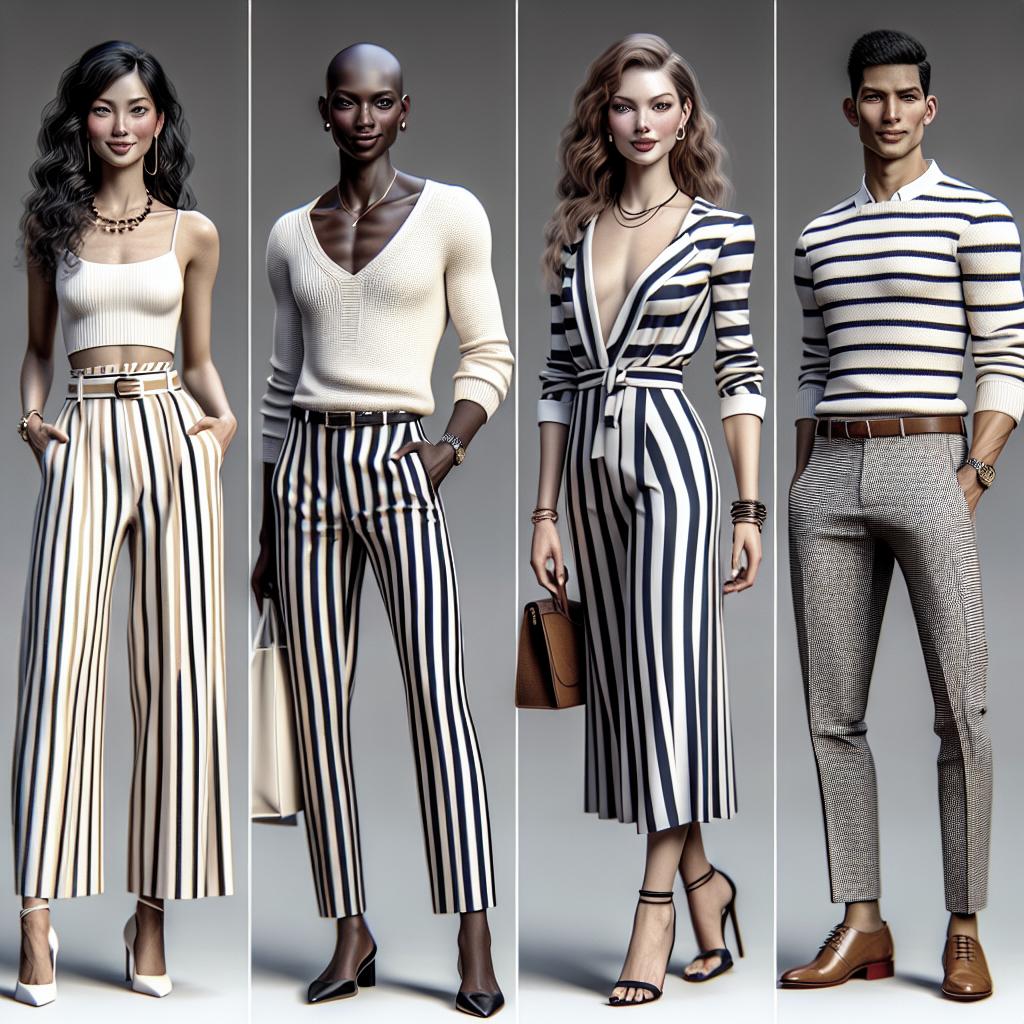
Similarly, if you’re styling bottoms like skirts or trousers, consider vertical or diagonal stripe patterns. These provide the visual effect of lengthening the legs and are particularly beneficial if you’re looking to achieve a sleek silhouette without visually widening your frame.
3. Create vertical lines
Vertical stripes are a classic trick to elongate the body and slim down the appearance. Whether they form a fine pinstripe in a tailored blazer or more pronounced stripes on a jumpsuit, they guide the eye up and down rather than sideways, offering a streamlined look.
Wearing vertical stripes can easily be achieved with blazers or trousers. These garments often come with elegant vertical patterns that draw attention vertically, giving an illusion of added height and slenderness. For a touch of modernity, mix vertical stripes with solid pieces for a cutting-edge ensemble.
Furthermore, vertical lines aren’t just about the stripes themselves but also about styling. Long necklaces or scarves, for instance, can complement vertical stripes by enhancing the continuity of vertical lines throughout your look, reinforcing the elongated silhouette effect.
4. It’s all about the fabric
The choice of fabric plays a fundamental role in how stripes lay on the body. Stiff or bulky fabrics can make stripes bulge, giving an undesired effect. Instead, opt for fabrics that drape nicely over your figure, as they allow stripes to appear more natural and flattering.
Fabrics like cotton blends, silks, and lightweight wools can hold patterns without distortion. These fabrics serve as excellent canvases for stripes, maintaining the straightness and continuity of the lines, and thus contributing to a sleek look that complements your build.
Additionally, the thickness of the stripes should be considered when selecting fabrics. Thinner stripes often translate well on flowing fabrics, while wide stripes can be more forgiving on denser materials but may require more selective garment shapes to avoid exaggerating width.
Submit a Comment Cancel reply.
Embracing stripes within your wardrobe can dramatically boost your style confidence. By carefully considering the length of your garments, the placement of stripes, the creation of vertical lines, and the choice of fabric, you can wear stripes in a flattering and fashionable way. The key is to find styles that enhance your natural figure rather than working against it, ensuring that stripes become a go-to pattern in your clothing rotation.
| Tips for Wearing Stripes | Key Advice |
|---|---|
| Choose the Right Length | Opt for longer garments to elongate the body. |
| Stripe Placement | Position stripes carefully to emphasize or downplay areas. |
| Create Vertical Lines | Use vertical stripes to draw the eye up and down. |
| Fabric Selection | Choose fabrics that drape well, like cotton blends or silk. |
“`